


Let’s be honest: finding makeup that doesn’t leave your sensitive skin red and angry can feel like a losing battle. But it’s not about giving up; it’s about choosing smarter. The best natural makeup for sensitive skin is all about calming, plant-based ingredients—not a laundry list of potential irritants.
Think of it as makeup that acts more like skincare.
Why Natural Makeup Is a Game Changer for Reactive Skin
If you’ve ever dealt with that tell-tale itchiness, redness, or a surprise breakout after trying a new product, you know the struggle is real. So many traditional cosmetics are packed with synthetic fragrances, harsh preservatives, and drying alcohols that just wreak havoc on the skin’s delicate barrier.
This is exactly why making the switch to natural makeup can be such a relief.
For many of us, it goes beyond just dodging a bad reaction. It’s about actively feeding our skin the good stuff. Brands like Axiology are built on this philosophy, creating gorgeous makeup that is both vegan and plastic-free. Instead of aggressive chemicals, you’ll find skin-loving ingredients like reishi and snow mushrooms, which are total powerhouses for calming and hydrating the skin.
The Growing Demand for Gentle Cosmetics
This shift toward gentle, effective makeup isn't just some niche trend; it’s a full-blown movement. The global natural cosmetics market is exploding, and it turns out a huge piece of that pie—nearly 47.3% in 2024—is facial makeup that doubles as skincare.
People are tired of compromising. They're actively searching for plant-based, cruelty-free options that deliver beautiful results without making their skin miserable.
The goal is simple: find makeup that leaves your skin feeling calm, looking radiant, and genuinely comfortable all day long. It’s about building confidence not just in how you look, but in the products you trust.
This guide is your roadmap to getting there. But before we even think about makeup, a solid foundation is key—and I mean your actual skin. Getting into a perfect skincare routine specifically for sensitive skin is the best way to prep your complexion for anything.
Once your skin is happy, we’ll get into the fun stuff: decoding labels, mastering application tricks, and picking products that will help your skin truly thrive.
Decoding Ingredient Labels: What to Welcome and What to Avoid
Staring at a long list of ingredients on a makeup label can feel like a pop quiz in chemistry. But honestly, getting to know what's actually in your products is the single most important thing you can do for your sensitive skin.
It’s not about memorizing every single term. It’s about learning to spot the good guys from the usual suspects that cause trouble.
The great news is that the beauty world is finally catching on. The global market for sensitive skincare was worth a whopping $44.6 billion in 2023 and is expected to hit nearly $80.97 billion by 2030. That growth is because of people like us demanding cleaner, gentler, plant-based formulas that don't cause a five-alarm fire on our faces.
Skin-Soothing Ingredients to Look For
When you're scanning labels, you want to see ingredients that are going to soothe, hydrate, and protect your skin barrier. Think of these as the VIPs of your makeup bag.
- Squalane: This is a fantastic, lightweight oil that feels almost identical to your skin's natural moisture. It hydrates beautifully without any greasy feeling and won't clog pores.
- Jojoba Oil: Another hero ingredient that’s incredibly similar to our skin’s own oils. It's super gentle and helps keep everything balanced.
- Mushroom Extracts: Ingredients like reishi and snow mushroom are amazing for calming down inflammation and giving your skin a serious hydration boost.
- Vitamin E (Tocopherol): This is a powerful antioxidant that helps shield your skin from environmental stress while also keeping the product fresh.
Getting familiar with which natural ingredients for makeup are truly beneficial is how you build a routine your skin will actually thank you for.
This handy little graphic breaks down the basics—from understanding your skin's unique needs to picking the right ingredients and applying them with a gentle touch.
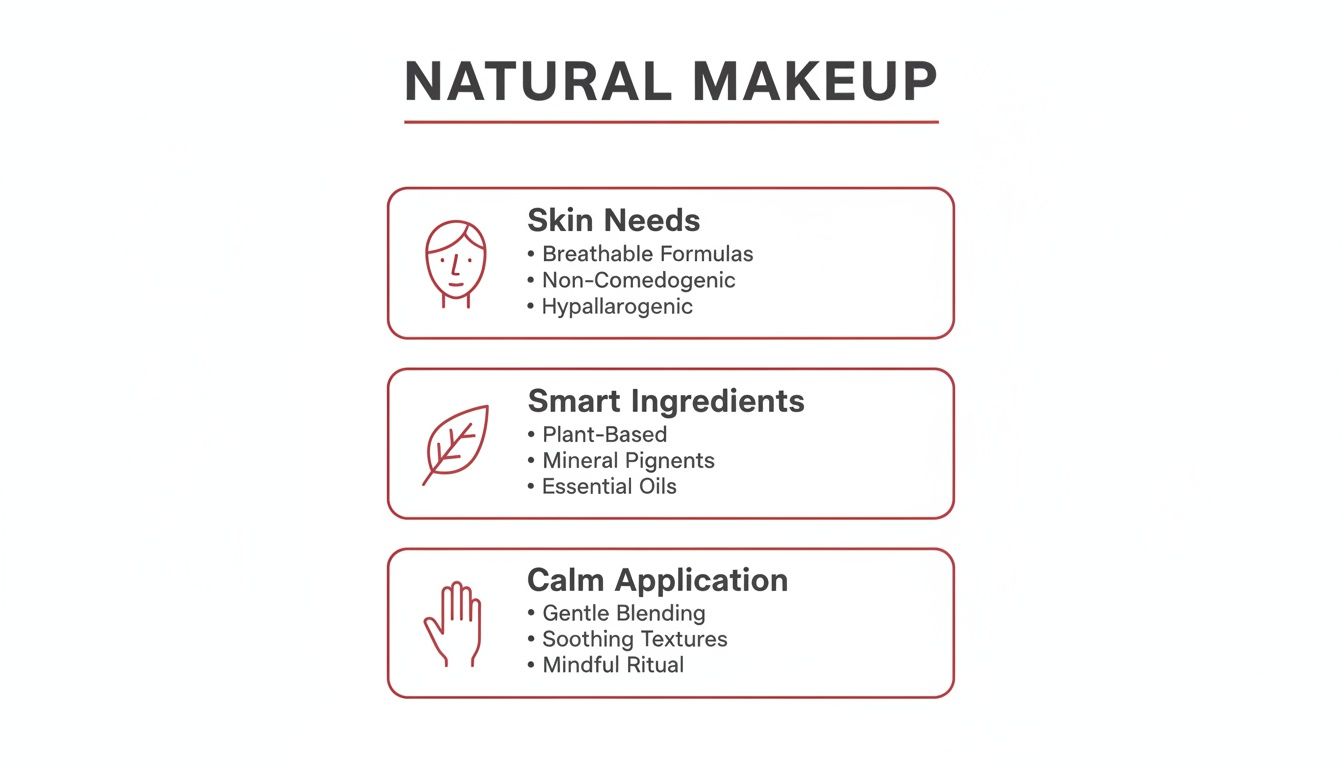
It’s a great reminder that it’s not just what you use, but how you use it that makes all the difference for sensitive skin.
Common Irritants to Sidestep
Just as crucial as knowing what to welcome is knowing what to run away from. Some ingredients are just notorious for triggering redness, itchiness, and breakouts, especially for reactive skin.
Knowing which skincare ingredients you should avoid is half the battle. Think of it as creating a "do not fly" list for your face.
To make this easier, I've put together a quick-glance table to help you spot the heroes and villains on any ingredient list.
Sensitive Skin Ingredient Guide
| Green Flags (Look For) | Why It's Good | Red Flags (Avoid) | Why It's a Risk |
|---|---|---|---|
| Plant Butters (Shea, Kokum) | Deeply moisturizing and rich in fatty acids that nourish the skin barrier. | Synthetic Fragrance/Parfum | A top allergen that can cause immediate redness, itching, and rashes. |
| Plant Oils (Jojoba, Avocado) | Mimic skin's natural sebum, providing balanced hydration without irritation. | Drying Alcohols (SD Alcohol) | Can strip the skin of its protective oils, leading to dryness and irritation. |
| Antioxidants (Vitamin E, Elderberry) | Protect skin from environmental damage and help soothe inflammation. | Harsh Sulfates (SLS) | Aggressive detergents that can disrupt the skin barrier and cause severe dryness. |
| Minerals (Zinc Oxide, Iron Oxides) | Offer gentle pigmentation and sun protection without chemical filters. | Chemical Sunscreens | Often contain ingredients like oxybenzone that can trigger allergic reactions. |
This isn't an exhaustive list, but it's a solid starting point for becoming a more conscious shopper. When you know what to look for, you're in control.
A simple rule of thumb: if an ingredient list is a mile long and full of words you can’t pronounce, it might be worth a closer look. Simpler formulas are often safer bets for sensitive complexions.
Becoming a confident label reader is empowering. It's how you make choices that lead to a calm, happy, and radiant complexion.
How to Prep Your Skin for a Flawless Application
Let's be real: a calm, radiant makeup finish has less to do with the makeup itself and more to do with the canvas you put it on. If you have a sensitive complexion, this prep work isn't just a suggestion—it’s the most critical part of achieving a look that feels as good as it looks.
Rushing this stage is almost always the difference between a happy face and an irritated one.
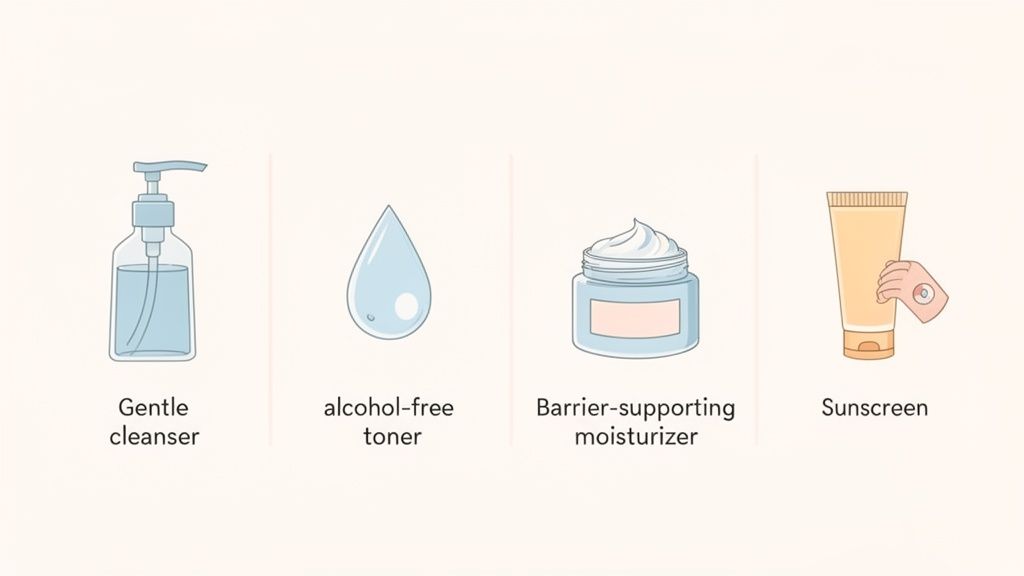
The goal is simple: create a hydrated, soothed, and protected base. Think of your skin as a delicate fabric; you wouldn't scrub it with harsh soap right before wearing it, would you? The same logic applies here. Proper prep helps products like foundation glide on smoothly instead of clinging to dry patches or kicking up redness.
Build a Soothing Pre-Makeup Routine
Your routine doesn't need a dozen steps, but each one should be intentional. It all starts with a cleanser that leaves your skin feeling soft, not squeaky clean or tight. A creamy, non-foaming formula is usually the best bet because it purifies without stripping away the essential oils your skin needs to stay balanced.
Next up, an alcohol-free toner or a hydrating essence. This step is all about restoring your skin's pH and adding a crucial layer of moisture back in. Look for ingredients like rosewater or chamomile to calm any existing redness. Pro tip: Gently press it into your skin with your fingertips rather than using a cotton pad, which can be slightly abrasive.
The most important step? Moisturizer. A good barrier-supporting moisturizer acts like a primer, creating a smooth surface while locking in hydration. This is what prevents makeup from settling into fine lines and keeps your skin feeling comfortable all day. If your skin is already feeling reactive, figuring out how to calm irritated skin before applying anything else is non-negotiable.
Finally, sunscreen is your daily shield. A broad-spectrum, mineral-based SPF of 30 or higher protects your sensitive skin from UV damage, which can make irritation and redness even worse. Stick to a formula designed for sensitive skin to avoid potential stinging or breakouts.
The Importance of Patch Testing
Even with the cleanest formulas, introducing a new product requires a little bit of caution. A patch test is your best defense against a full-blown reaction. Before you go all-in with a new product like Axiology's Fungdation on your entire face, take a moment to do this:
- Select a Discreet Area: Apply a small amount of the product to a less visible spot, like behind your ear or on your inner wrist.
- Wait and Observe: Give it at least 24-48 hours, paying close attention to how your skin responds.
- Check for Reactions: Look for any signs of redness, itching, swelling, or bumps. If your skin is still calm and clear, you can feel much more confident about using it on your face.
This simple step takes the guesswork out of building a routine with natural makeup for sensitive skin. It empowers you to introduce new products safely, ensuring your skin stays happy, calm, and ready for a flawless application every time.
Gentle Makeup Application Techniques That Work
Here’s something you might not realize: how you apply your makeup matters just as much as the products you pick. This is especially true when your skin is on the sensitive side.
Aggressive rubbing or rough blending can instantly set off redness and irritation. Suddenly, all that careful work you did choosing the right products is out the window. A mindful, gentle application is really the key to getting a beautiful finish without provoking your complexion.
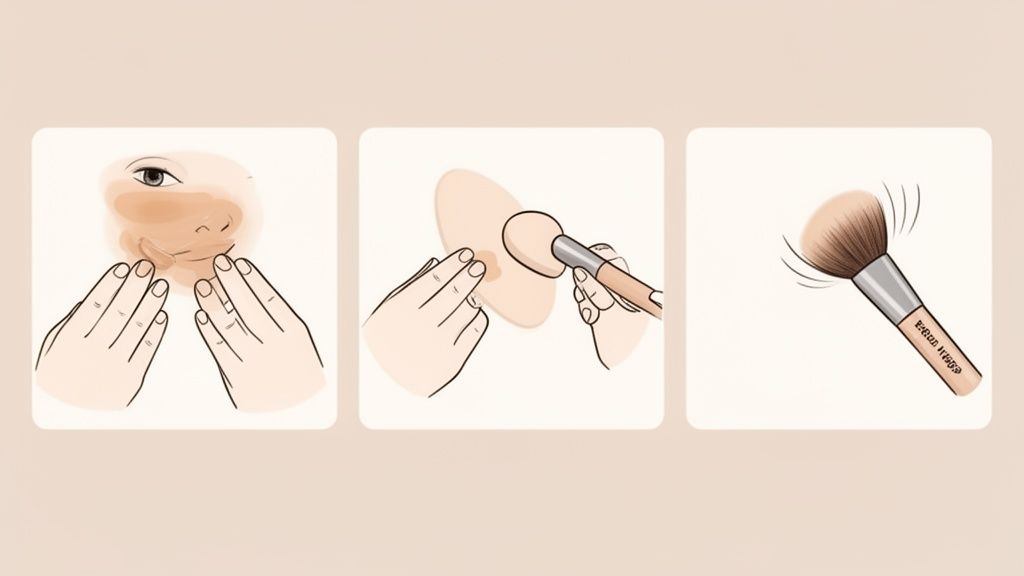
Sometimes, the best tools are the ones you were born with. Using clean fingertips to apply products like foundation or multi-use sticks is often the kindest approach. The natural warmth from your hands helps melt creamy formulas right into your skin, letting them blend seamlessly with hardly any friction. Just remember to press or pat, never wipe or drag.
Master Your Tools For Minimal Irritation
If you’re a brush or sponge devotee, the quality and cleanliness of your tools are non-negotiable. I can't tell you how many times a mysterious flare-up has been traced back to scratchy bristles or a dirty applicator.
- Choose Soft Vegan Brushes: Look for brushes with densely packed, ultra-soft synthetic bristles. They’re less likely to feel abrasive on the skin, and they’re cruelty-free, which we love.
- Use a Damp Sponge: A soft, latex-free sponge, used damp, is amazing for a gentle touch. It helps press foundation into the skin for a natural, second-skin finish without any pulling.
- Keep Everything Clean: This one is huge. Bacteria loves to hang out on makeup tools, leading to breakouts and irritation. It's so important to learn how to sanitize makeup brushes and sponges regularly. Seriously, make it a weekly habit.
When you’re using these tools, your technique is everything. Forget dragging or buffing in harsh circles. Instead, think about stippling or dabbing.
A stippling motion involves lightly tapping the product onto the skin with the end of your brush. This builds coverage gently without causing friction and is a fantastic technique for applying natural makeup for sensitive skin, especially over areas prone to redness.
Build Coverage Patiently In Thin Layers
One of the biggest mistakes I see people with sensitive skin make is globbing on too much product at once. A single, heavy layer of foundation is a recipe for a cakey look and can feel like it’s suffocating your skin. The real secret to a flawless, comfortable finish is to build it up patiently.
Start with a sheer layer of foundation all over. Then, go back in with just a tiny bit more product only where you need it—maybe around the nose or on a blemish. For products like Axiology's multi-use color sticks, use a light dabbing motion with your finger to place the color, then gently pat the edges to blend.
This layering technique is a game-changer for a few reasons:
- It allows your skin to breathe, which means a lower chance of clogged pores.
- It provides a more natural finish, so you avoid that heavy, masked look.
- It minimizes physical contact with your skin, which is a huge win for preventing irritation.
By adopting these gentler methods, you make sure your application process is as soothing and skin-friendly as the clean makeup you've chosen. It’s a mindful approach that creates a calm canvas and a radiant look that feels comfortable all day long.
Winding Down: Makeup Removal and Skin Recovery
How you end your day is just as important as how you start it—especially if you want to keep your skin calm and happy. This last step, makeup removal, is your chance to wash away the day, clearing out impurities so your skin can finally breathe and get to work repairing itself overnight.
If you skip it, you’re looking at clogged pores and irritation, which pretty much undoes all the careful work you put into your application in the first place. A gentle but effective approach isn’t just nice; it's a must. The goal is to get your makeup off without all the aggressive scrubbing that sensitive complexions just can’t handle.
This is where the two-step double cleanse method really comes into its own, respecting your skin’s delicate barrier while still getting everything squeaky clean.
The Gentle Double Cleanse Method
First up, grab an oil-based cleanser or a great micellar water. These are fantastic for breaking down the stubborn pigments and oils in your makeup without stripping your skin of its natural moisture. Gently massage the oil onto dry skin, or sweep a saturated cotton pad across your face. You’ll see your makeup just melt away.
For the second cleanse, you’ll want a creamy, non-foaming cleanser. This step whisks away any leftover residue from the oil cleanse, leaving your skin totally purified. Technique is everything here: always use lukewarm water because hot water can trigger redness. When you’re done, pat your face dry with a soft, clean towel. No rubbing!
This careful approach is super important when you think about what goes into making gentle cosmetics. It's a huge challenge for brands to create stable, long-lasting natural makeup without the usual synthetic preservatives. This has pushed companies to get creative with sustainable ingredients and serious dermatological testing to give us what we need. You can read more about these industry formulation trends on technavio.com.
Aftercare: Your Skin’s Overnight Repair Crew
With your skin feeling fresh and clean, this last part is crucial for recovery. Now’s the time to apply products that will help your skin’s natural repair cycle while you get some sleep.
Think of your nighttime routine as your skin’s best chance to heal. Give it calming, restorative ingredients, and you’ll wake up to a complexion that’s refreshed, not reactive.
A few drops of a calming serum with ingredients like hyaluronic acid or mushroom extracts can do wonders for hydrating and soothing inflammation. Follow that up with a restorative night cream to lock in all that moisture and support your skin barrier.
It's a simple little ritual, but it makes sure your skin is not just clean but actively recovering. The result? Skin that’s resilient and ready for another beautiful day.
Got Questions About Natural Makeup for Sensitive Skin? We’ve Got Answers.
Even when you feel like you have your routine down, questions pop up. It happens. The world of clean beauty can sometimes feel like it’s full of "what ifs," especially when you have reactive skin.
We’ve heard a lot of the same concerns over the years, so we’ve rounded them up here to give you clear, straightforward answers. Think of this as your go-to guide for those nagging doubts. A little extra knowledge can make all the difference in keeping your skin happy.
Can I Get Good Coverage with a Natural Foundation?
Oh, absolutely. The idea that natural foundation is always super sheer is a total myth, probably left over from the early days of clean beauty. Today’s formulas are way more sophisticated.
Modern natural foundations are designed to be buildable, which puts you in complete control. You can go for a light, fresh, skin-like finish or strategically layer it up to cover redness or blemishes. The best part? It won’t feel heavy or look cakey. The secret is often in the hydrating, skin-loving ingredients that prevent that patchy, dry look. Start small, gently pat or stipple it on, and add more only where you need it.
How Do I Know if a New Product Is Irritating My Skin?
A reaction isn’t always a dramatic, instant flare-up. Sometimes it’s sneaky. You might feel an immediate stinging sensation, sure, but it could also be a delayed reaction—like redness, itchiness, or even tiny bumps that show up a day or two later. This is exactly why patch testing is a non-negotiable step in my book.
Here’s a quick refresher on how to do it right:
- Pick a Spot: Dab a tiny bit of the new product on a discreet area, like behind your ear or on your inner arm.
- Wait it Out: Now for the hard part—patience. Give it a full 24 to 48 hours to see what happens.
- Check for Clues: Look closely for any redness, swelling, hives, or irritation. If you see anything suspicious, that’s your sign that this product isn't the one for your face.
This simple test saves you from a major skin meltdown by pinpointing a problem before you’ve slathered the product all over.
"Choose makeup labeled hypoallergenic and fragrance-free. It’s not just a preference—it’s a must for kids with eczema or sensitive skin." - Dr. Jaliman, Board-Certified Dermatologist
This is just as true for adults. Labels are helpful, but nothing beats knowing your own skin.
Does "Hypoallergenic" Mean a Product Is 100% Safe?
Not exactly. While it sounds super official, "hypoallergenic" just means a product was formulated to be less likely to cause an allergic reaction. Companies usually achieve this by leaving out common triggers like synthetic fragrances or certain dyes.
Here’s the thing, though: the term isn't strictly regulated, so it’s not a 100% safety guarantee. Anyone can be sensitive to pretty much any ingredient, even if it’s totally natural. One person’s skin might love a certain botanical extract, while another’s might hate it. That’s why your best bet is always to read the full ingredient list, know your personal triggers, and patch test every single new product.
Are Natural Preservatives Actually Effective (and Gentle)?
Yes, when formulated correctly! This is an area where the clean beauty industry has made huge leaps. We now have access to really effective, plant-derived preservatives that are so much gentler than old-school synthetic options like formaldehyde-releasers.
You might see ingredients on a label like:
- Radish Root Ferment Filtrate: A gentle but powerful antimicrobial.
- Vitamin E (Tocopherol): A classic antioxidant that also helps keep products fresh.
- Elderberry Extract: This one pulls double duty with both antioxidant and antimicrobial powers.
When it comes to natural makeup for sensitive skin, a smart preservation system is everything. It keeps your products safe from nasty bacteria without causing irritation. It’s truly the best of both worlds.
At Axiology, we believe makeup should be as kind to your skin as it is to the planet. Our products are thoughtfully crafted with skin-soothing ingredients, all packaged without plastic. Explore our collection of vegan, cruelty-free beauty essentials designed for a calm and radiant you at https://www.corbo.pro.


